
The introduction of a research paper, along with the title and abstract, is one of the most important sections of your work.
This section acts as the face of your paper, setting the tone for the reader and providing an essential overview of what your research is about.
Writing a strong introduction is crucial because it determines how well your research will be understood, accepted, and published.
This blog post will walk you through the process of writing an effective research paper introduction in easy steps, helping you craft an engaging and compelling introduction that captures the reader’s attention.
Contents
Why is the Introduction Important?
What Should Be Included in the Research Paper Introduction?
Step-by-Step Guide on Writing the Introduction Section
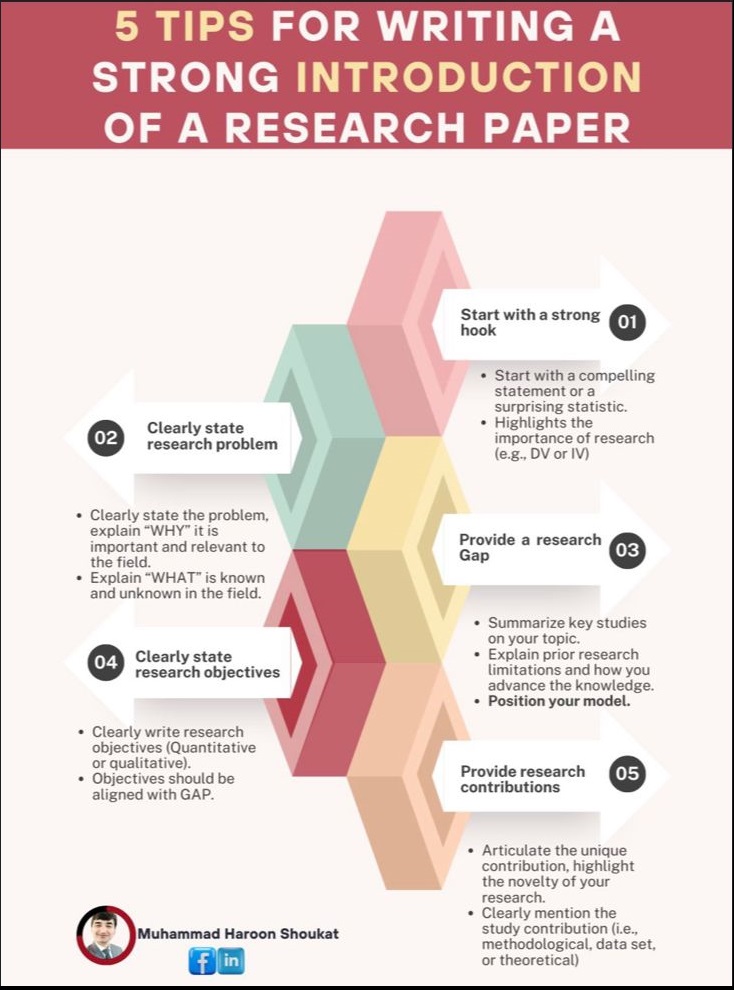
Step 1: Start with a Hook
Step 2: Present the Research Background
Step 3: Identify the Research Gap
Step 4: State the Research Question and Objectives
Step 5: Highlight the Study’s Novelty
Step 6: Provide a Brief Overview of the Paper’s Structure
Why is the Introduction Important?
A research paper introduction serves several vital functions:
- Introducing the Topic: It establishes the area of research, giving the reader background information on what’s already known.
- Contextualizing the Problem: It explains why your research is necessary by highlighting gaps in existing knowledge or pointing out areas that need further exploration.
- Establishing Significance: It emphasizes the importance of your study and why your research matters to the academic community and industry.
- Setting Expectations: It offers a glimpse into the structure of the paper and tells the reader what to expect.
Without a well-written introduction, your readers may struggle to understand the purpose of your research. This section serves as a roadmap, guiding them through the arguments, evidence, and conclusions that follow.
What Should Be Included in the Research Paper Introduction?
When writing an introduction, you should aim to achieve the following goals:
- Present Your Research Topic: Clearly define the focus of your research and its relevance.
- Capture Reader Interest: Engage your audience from the beginning by presenting a compelling reason to read your paper.
- Summarize Existing Research: Highlight the current state of research on your topic, referencing the most important studies.
- Define Your Research Problem: Explain the specific problem your research aims to solve.
- Position You’re Approach: State the novel aspects of your study and how it contributes to existing knowledge.
Outline the Paper’s Structure: Provide a brief overview of how your paper is organized.
Step-by-Step Guide on Writing the Introduction Section
Start with a Hook
Begin your introduction with a hook—something that captures the reader's attention. This could be an interesting fact, a surprising statistic, a question, or an insightful quote related to your research topic.
Example: "In 2021, over 1.5 million engineering graduates entered the workforce, but only 60% were considered industry-ready. This gap between education and industry demand is the focus of this study."
Step 01

Present the Research Background
After the hook, provide some context for your research. You should introduce the background of your research topic, outlining its importance and positioning your work within the broader field.
Example: "Despite ongoing efforts to bridge the gap between academia and industry, many engineering graduates still lack the practical skills necessary for success in the workforce. This issue has led to an increased interest in integrating industry partnerships into university curricula."
Step 02
Identify the Research Gap
Now, highlight a gap in existing research or literature. Point out why existing studies do not fully address the issue at hand and how your research will fill that gap. This is your opportunity to show the novelty of your work.
Example: "Although numerous studies have explored the benefits of industry-academic partnerships, few have specifically addressed their impact on the competency development of electronics engineering students."
Step 03
State the Research Question and Objectives
Clearly state the research question or hypothesis your paper aims to answer. This is a critical part of your introduction because it helps the reader understand exactly what your research seeks to accomplish.
Example: "This study seeks to determine the impact of industry partnerships on the competency development of electronics engineering students, comparing performance between students with and without industry involvement."
Step 04
Highlight the Study's Novelty
Emphasize what makes your research unique. Mention the key contributions of your work and how it advances knowledge in the field. This could involve using a new methodology, exploring a new topic, or addressing an unexplored aspect of an existing issue.
Example: "By comparing two student groups—one with industry partners and one without—this research will provide new insights into how industry collaboration influences practical learning in electronics engineering."
Step 05
Provide a Brief Overview of the Paper’s Structure
End the introduction by outlining the structure of your paper. Briefly describe the contents of each section so the reader knows what to expect.
Example: "The paper begins by reviewing the existing literature on industry partnerships in education. The methodology section follows, explaining how the two student groups were compared. Results are presented in Section 4, and the final section discusses the implications of the findings for curriculum development in engineering education."
Step 06
Final Tips for Writing a Strong Introduction
- Keep It Concise: Your introduction should be clear and to the point, avoiding unnecessary details. A well-crafted introduction should not overwhelm the reader.
- Be Engaging: Make sure the introduction captures the reader’s interest and sets the stage for the rest of your paper.
- Refer to Recent Literature: Ensure your introduction includes references to recent, relevant studies in the field to show that you are aware of current research.
- Use Clear Language: Avoid jargon or overly technical language in the introduction; it should be accessible to a wide academic audience.
How Long Should the Introduction Be?
The length of your introduction depends on the overall length of your research paper. Typically, the introduction is about 10-15% of your total word count. For a 5,000-word paper, the introduction should be around 500-750 words.

Ready to start writing your research paper introduction?
Get expert writing and editing support for every section of your paper. Contact us today for professional assistance!
Estimated Reading Time: 5-7 minutes